iTrustCapital Wallet – A Comprehensive 1200-Word Overview (No Links)
The digital asset world has grown rapidly over the past few years, and many platforms have emerged that focus on helping users manage cryptocurrency in ways that align with long-term saving or retirement-oriented strategies. Among these platforms, one name frequently mentioned in discussions about crypto asset management is the iTrustCapital wallet ecosystem. While every platform has its structure, iTrustCapital distinguishes itself through a simple approach: providing a streamlined environment for people to hold digital assets in an account framework commonly associated with long-term financial planning.
The iTrustCapital wallet, as part of the broader iTrustCapital system, is designed to offer clarity, stability, and accessibility for users who prefer a structured approach to their digital assets. What makes it particularly interesting is how it blends the concepts of digital asset storage with an environment typically used for long-term savings. Although minors cannot open or manage financial accounts of this kind, understanding how this type of system works can be helpful for educational purposes, especially for learning about how digital assets are handled in professional, regulated frameworks.
Understanding the Purpose of iTrustCapital’s Wallet System
At its core, the iTrustCapital wallet acts as a secure space within the platform where digital assets are held. Unlike standard crypto wallets used for everyday sending and receiving of tokens, the iTrustCapital wallet system is part of a more structured ecosystem. Instead of emphasizing high-frequency transactions, it focuses on long-term, secure storage of supported digital assets under a managed framework.
Rather than functioning like a standalone app where the user directly controls private keys, the iTrustCapital wallet operates within a custodial structure. This means security, storage, and maintenance are professionally managed. Many people who prefer stability and a hands-off approach find this helpful because it removes the technical difficulty associated with handling private keys or navigating complicated blockchain interactions.
How the Wallet Fits Into the Broader Ecosystem
The wallet is only one component of the overall platform. It operates alongside a dashboard, educational resources, and a record-keeping system that helps users understand the status of assets stored within the environment. While many consumer wallets emphasize sending tokens to friends, swapping between networks, or experimenting with decentralized applications, the iTrustCapital wallet focuses on clarity and structured asset holding.
This framework appeals to people who want digital asset exposure while maintaining a sense of consistency and long-term organization. It creates an environment that blends familiarity with professional financial structure, which is uncommon in traditional crypto wallets.
Security Foundations of the Wallet System
Security is a major consideration across the digital asset industry, and custodial systems generally focus on reducing technical risk for the individual user. The iTrustCapital wallet follows industry-standard security practices designed to maintain the integrity of stored assets. Instead of having users manage seed phrases or private keys, the custodial model centralizes this responsibility under professional management. This removes the risk of losing access due to misplacing a recovery phrase or accidentally exposing private credentials.
Institutional-grade storage solutions often include multi-layer protection, offline storage components, and strict authorization systems. While each company has its specific procedures, the general idea is to minimize attack surfaces and ensure that assets remain safe even in scenarios involving market volatility or cybersecurity threats.
Because users do not directly control private keys, they do not face the burden of managing expert-level security themselves. The trade-off is that they rely on the institution, but many people consider that an acceptable balance for long-term storage purposes.
User Experience and Platform Layout
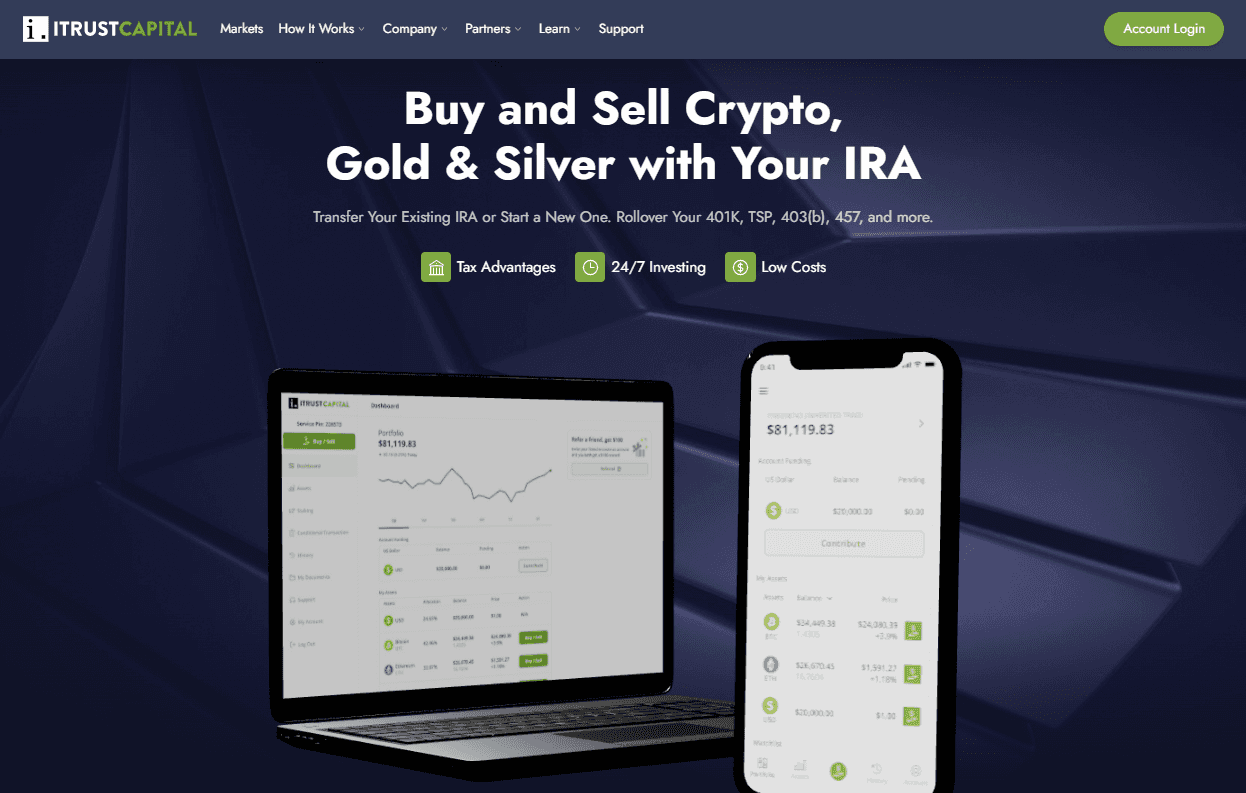
The wallet operates within a clean and straightforward interface. Instead of overwhelming the user with complex charts or technical blockchain data, the platform focuses on clarity. Balances, asset types, and historical activity are displayed in a structured, easy-to-read format. This simplicity helps reduce confusion and makes it easier for users to understand what they own and how it is stored.
The interface typically includes sections for viewing assets, monitoring overall account performance, and reviewing activity logs. This is similar to what you might find in traditional financial dashboards, but adapted for digital asset holdings. The focus is always on transparency and readability.
Supported Assets and Their Role in the Wallet
The iTrustCapital wallet supports a curated selection of widely recognized cryptocurrencies. Instead of offering hundreds of experimental tokens, the platform chooses a smaller range of well-established assets. This aligns with its philosophy of long-term stability rather than short-term speculation.
The selected assets generally include popular cryptocurrencies such as Bitcoin and Ethereum, along with several others that have strong adoption and long-term use cases. By focusing on a limited list, the platform keeps the experience clean and avoids overwhelming users with too many choices.
A Long-Term Perspective on Digital Assets
One of the defining features of the wallet system is its long-term orientation. The broader iTrustCapital ecosystem encourages planning rather than rapid speculation. Digital assets stored in this environment are typically handled within a structure associated with long-range outlooks.
Because minors cannot open or manage retirement-style accounts, this topic is best understood academically rather than practically. However, learning about structured, long-term approaches to emerging technologies can be valuable, especially for understanding how professionals approach digital asset management. It provides a perspective that contrasts sharply with the fast-moving, high-risk areas of the cryptocurrency space.
Custodial vs. Non-Custodial Considerations
One of the biggest distinctions in the crypto world is between custodial wallets and non-custodial wallets. The iTrustCapital wallet belongs firmly in the custodial category. This approach has advantages and disadvantages:
Advantages
Lower technical burden for users
Professional security and storage
Reduced risk of losing access due to mismanaged seed phrases
A simplified interface without blockchain complexities
Limitations
Users do not personally control private keys
Asset transfers are limited within the platform’s structure
It cannot be used like regular consumer wallets for sending crypto to friends or using decentralized apps
Learning the difference between custodial and non-custodial models is important for anyone studying digital asset frameworks.
How the Wallet Handles Activity and Tracking
Activity within the wallet is typically logged in an organized, chronological manner. This includes deposits, rebalancing actions, and any platform-approved movements involving digital assets. The purpose of this tracking is transparency. Users can easily review how the account has changed over time, which helps create a clear understanding of their asset history.
The activity section is not designed for rapid trading or constant transaction monitoring. Instead, it supports the platform’s emphasis on consistent documentation and simplicity.
The Educational Value of Understanding This System
Even though minors cannot use this kind of account, learning about it offers insight into how structured, secure digital asset management works. It introduces concepts such as:
Custodial infrastructure
Long-term digital asset holding
Institutional security practices
Asset tracking in professional environments
The difference between consumer wallets and managed wallets
Understanding these ideas can help build a foundation for future financial literacy, especially as digital assets continue to evolve.
Conclusion
The iTrustCapital wallet represents a unique approach to digital asset management. Instead of functioning like a typical crypto wallet used for everyday transactions, it is designed as part of a secure, professionally managed ecosystem oriented toward long-term storage. With its structured interface, curated asset list, and custodial security model, the wallet emphasizes stability, clarity, and transparency.
While this type of account is strictly for adults and cannot be used by minors, studying how it works can provide useful knowledge about responsible digital asset management, institutional storage practices, and the broader landscape of cryptocurrency infrastructure. The platform’s wallet system shows how digital assets can be managed in an organized, long-term-focused environment rather than the fast-paced, high-risk approach often associated with consumer crypto usage.